Sources
 Featured Links
 Videos
 Downloadables
 Upcoming Events


Marketing in the Intelligence Economy: From Attention to Trust
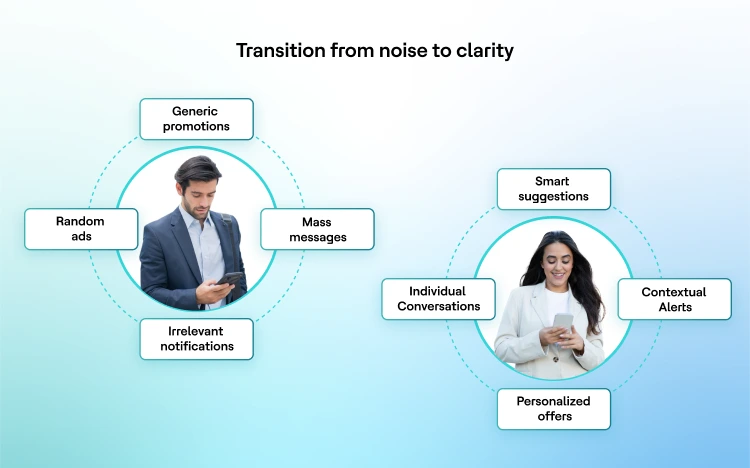
The New Reality of Modern Marketing
Every day, we are surrounded by brands trying to get noticed. Emails fill our inboxes. Ads interrupt our videos. Social media feeds overflow with promotions and offers.
For a long time, this chase for visibility defined what marketing meant. The thinking was simple: if you could capture attention even for a moment, you could win the customer.
That approach has stopped being effective. Customers aren’t swayed by the loudest message anymore; they’re simply overloaded. And that shift brings us to the rise and limits of the attention economy.
The Rise and Limits of the Attention Economy
The attention economy was built on a single assumption: visibility leads to sales. That’s why companies invested heavily in TV ads, print placements, billboards, banner ads, influencer pushes, and every form of interruption-based promotion. The entire goal was to stand out long enough to be noticed.
The problem is that customers today are drowning in messages. People face thousands of commercial impressions every single day. Instead of being persuaded, they’re tuning out.
And when they do pay attention, they expect it to be worth their time. 71% of consumers want personalized interactions, while 76% feel frustrated when they don’t get them1. The attention economy promised reach, but too often it delivered noise.
That disappointment pushed businesses to search for something more lasting than a passing glance: trust.
The Power of Trust and Why It’s Hard to Scale
If attention is temporary, trust is what endures. Once people trust a brand, they stop looking elsewhere.
Consider a car mechanic you’ve gone to for over a decade. They know your car’s quirks better than anyone else and never try to oversell. When they say a part needs to be changed, you believe them instantly. That’s not marketing, it’s trust built through reliability and honesty.
But here’s the challenge: most businesses can’t spend decades earning trust from one customer at a time. They need a way to scale it without losing the human touch. And that’s where the intelligence economy comes in.
Intelligence Economy: The Missing Bridge
The Intelligence Economy doesn’t replace attention or trust; it connects the two. It uses data, timing, and context to turn fleeting attention into lasting trust.
Think about your favorite streaming app. You open it after a long day, and it reveals a film that fits your mood without you having to dig for it. No searching, no scrolling, just the right recommendation at the right time. That small moment of relevance feels effortless, but it’s built on intelligence. That’s how understanding context makes people feel seen, not sold to, and that’s how trust begins.
This is intelligence at work: consistently meeting expectations while finding the right moments to surprise and delight.
When done well, the results are clear. Personalization leaders see a 10–15% revenue uplift2.
In other words, customers don’t just want to be reached. They want to be understood.
5 Steps to Thrive in the Intelligence Economy
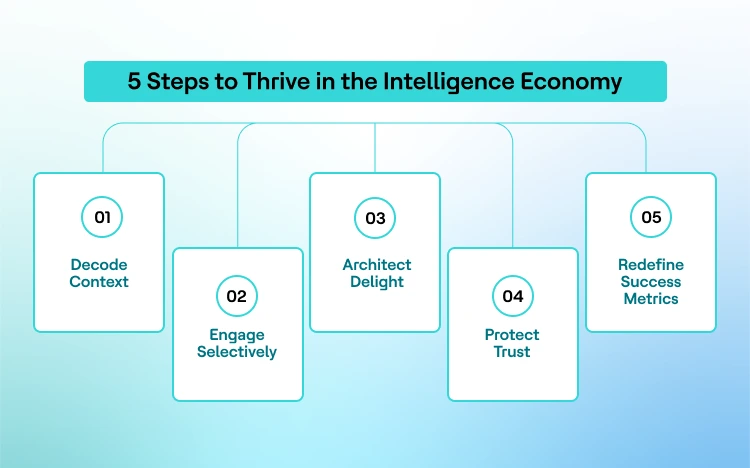
So how do businesses adapt? Here are five practical steps:
1. Decode Context
Every click, pause, or search provides context into a customer’s intent. Did they compare products? Did they abandon their cart? Each signal tells a story about what matters most to them
2. Engage Selectively
Being everywhere isn’t the goal—being relevant is. If someone starts shopping on their phone and finishes in-store, the journey should feel seamless. Precision matters more than presence.
3. Architect Delight
Small surprises leave the biggest impressions. A personalized thank-you note, a birthday discount, or an unexpected recommendation can create emotional loyalty far beyond the transaction.
4. Protect Trust
Trust is fragile. 75% of consumers say they will not buy from a company they don’t trust to protect their data3. Transparency, consent, and privacy aren’t just legal requirements—they are signals of respect that make customers feel safe.
5. Redefine Success Metrics
Clicks and impressions are no longer the scoreboard. True success is measured in lifetime value, repeat purchases, and advocacy—proof that attention has matured into trust.
From Noise to Meaningful Engagement
Marketing isn’t just about gathering clicks anymore. Audiences have already been overwhelmed by the constant demand for their attention, so attention alone doesn’t mean much. What actually matters now is trust. Brands want to get there, but to move from attention to trust, they need intelligence, i.e, real use of data, context, and AI to understand what people actually want in the moment.
In this landscape, context carries real weight. People don’t want generic campaigns or mass messaging. They expect brands to recognize their intent, adjust as things change, and offer something that feels relevant without being intrusive.
HCL Unica+, an AI marketing automation platform, fits this shift in how marketing works. It pulls customer data into one place, links activity across channels, and treats privacy as a fundamental requirement rather than an afterthought. This removes the usual fragmentation where teams run separate campaigns on different tools. With Unica+, AI can be applied consistently throughout the customer journey. Every interaction becomes clearer, more intentional, and better at building trust that lasts, which is ultimately what drives sustainable growth.
Discover how CMOs are mapping their AI journey and moving from experiments to impact.
https://www.hcl-software.com/unica-plus/cmo-ai-roadmap
https://www.hcl-software.com/unica-plus/ai-marketing-strategies-for-cmo
Sources

Start a Conversation with Us
We’re here to help you find the right solutions and support you in achieving your business goals.