How HCL BigFix Workspace+ Simplifies Endpoint Management


The modern enterprise workplace is increasingly hybrid, with employees accessing systems across multiple devices, operating systems, and locations. This shift has made workspace management more complex, requiring IT teams to secure, monitor, and optimise endpoints while maintaining a consistent digital employee experience across the organisation.
As endpoint diversity grows, traditional device management tools struggle to provide consistent visibility, timely patching, and reliable endpoint compliance. This growing complexity has accelerated the adoption of Unified Endpoint Management (UEM) as a core component of modern workspace management, bringing together device management, automation, and security on a single, scalable platform.
What is Unified Endpoint Management in HCL BigFix Workspace+?
Unified Endpoint Management (UEM) enables organizations to manage, secure, and monitor desktops, laptops, servers, and mobile devices through a single, centralized platform. By replacing siloed endpoint tools with unified visibility and control, UEM helps improve operational efficiency while strengthening endpoint compliance.
HCL BigFix Workspace+ is a unified endpoint management solution that empowers IT teams to manage, secure, and optimize all endpoints—wherever they are—from a single platform.
By consolidating device management, automation, and security into one solution, BigFix Workspace+ enables IT teams to operate proactively instead of reactively.
Why UEM Matters Today?
Traditional endpoint management was historically rooted in the "moat-and-castle" model, where security and administrative control relied on devices being physically connected to a Corporate LAN or authenticated via on-premises directory services like Active Directory.
This approach became factually obsolete with the rise of de-perimeterization, accelerated by the 2020 pivot to remote work, which moved endpoints from managed office environments to unsecured residential Wi-Fi and cellular networks. Consequently, the industry shifted from high-bandwidth, perimeter-dependent tools (like legacy SCCM) to Cloud-Native Unified Endpoint Management (UEM).
This transition replaces physical proximity and VPN dependency with identity-centric security and persistent over-the-internet management, ensuring that devices remain patched, compliant, and visible regardless of their geographic location.
How UEM Works in HCL BigFix Workspace+
HCL BigFix Workspace+ follows a continuous management model. Instead of periodic scans or manual interventions, it constantly evaluates endpoint health, security posture, and performance. This approach enables efficient workflows by supporting real-time communication, collaboration, and seamless access to tools and data, streamlining work processes and improving overall team productivity.
Here’s how it transforms hybrid workforce management:
Unified Endpoint Visibility and Control
- IT teams get real-time visibility into all devices, whether they’re in the office, at home, or on the go.
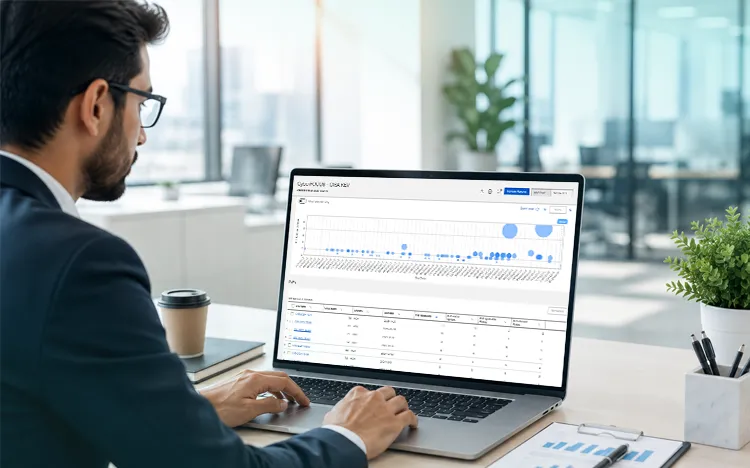
- With a single pane of glass, administrators can manage updates, enforce policies, and respond to security threats instantly.
Continuous measurement and monitoring of digital workspace metrics are essential for improving end-user experience and overall employee sentiment.This real-time visibility enables faster decision-making and helps IT teams resolve issues before they impact users.
AI-Driven Automation for Patch and Software Deployment
- Eliminate manual processes with automated patching and software distribution.
- AI-powered insights predict vulnerabilities and automatically apply necessary fixes before they become a threat. Data-driven insights from automation also help organizations measure engagement and identify friction points in the employee experience, providing valuable analytics for better workspace management.
This automation-driven approach significantly reduces manual effort while lowering the risk of missed patches and zero-day exposure.
Proactive Security and Compliance Enforcement
- Continuously monitor endpoint compliance and enforce security policies.
- Identify and remediate security vulnerabilities before they lead to breaches.
- Reduce zero-day risk with real-time patching and remediation.
Benefits & Business Value
Unified Endpoint Management (UEM) transforms IT from a reactive cost center into a strategic driver of operational resilience. By consolidating disparate tools into a single pane of glass, enterprises can realize the following business outcomes:
- Minimizing Costly Downtime: Through automated patch management and "self-healing" agentic capabilities, UEM prevents system failures before they occur. This drastically reduces Mean Time to Repair (MTTR) and ensures that mission-critical devices—whether in a hospital, a retail store, or a home office—remain functional and productive.
- Strengthening Posture & Risk Mitigation: UEM provides real-time visibility into the entire device fleet, allowing for the instantaneous enforcement of security policies and the rapid isolation of compromised assets. This reduces the "attack surface" and mitigates the massive financial and reputational risks associated with data breaches.
- Enhancing Digital Employee Experience (DEX): By enabling "Zero-Touch Provisioning," employees receive fully configured devices by mail that are ready to use in minutes, not days. This seamless onboarding, combined with proactive issue resolution, eliminates technical friction, directly boosting employee retention and overall output.
- Operational Efficiency & Resource Optimization: Consolidating legacy point solutions into one unified platform reduces licensing overhead and allows IT teams to pivot from manual, repetitive tasks to high-value innovation.
Performance Optimization for a Seamless User Experience
- Prevent device slowdowns by automating updates and reducing resource-heavy background processes.
- Ensure employees have always-available, secure access to the tools they need.
This focus on performance directly supports a better digital employee experience, reducing frustration and service desk dependency.
How Enterprises Simplify Workspace Management with UEM: Case Study
The world shifted towards hybrid models. From the smallest organizations to the largest Fortune 500 enterprises had no option but to make the shift Hybrid mode of work.
A large global enterprise faced growing challenges in workspace management, including inconsistent patching, limited endpoint visibility, rising service desk tickets, and a fragmented digital workspace experience. Managing thousands of employee devices across geographies had become operationally complex and difficult to scale.
By implementing HCL BigFix Workspace+ as a unified endpoint management solution, the organization consolidated device management, patching, and compliance into a single platform. IT teams gained real-time visibility across desktops, laptops, and remote endpoints, enabling faster issue resolution and proactive enforcement of endpoint compliance policies.
With AI-driven automation and continuous endpoint monitoring, the enterprise reduced manual interventions, accelerated patch deployment, and improved endpoint performance without disrupting employee productivity. This shift not only strengthened security posture but also delivered a more consistent and reliable digital employee experience, reducing downtime and service desk dependency across the organization.
|
See Intelligent Endpoint Management in Action Explore the complete case study to learn how unified endpoint visibility, automated patching, and proactive compliance helped a global organization modernize its digital workspace and support a hybrid workforce at scale. Read the full case study on HCLSoftware |
UEM vs MDM vs EDR: Understanding the Difference
While endpoint-related technologies overlap, each serves a distinct purpose. Understanding how UEM compares with MDM and EDR helps organizations choose the right solutions for their operational and security needs.
|
Capability |
UEM (Unified Endpoint Management |
MDM (Mobile Device Management) |
EDR (Endpoint Detection & Response) |
|
Device Coverage |
All endpoints (desktops, laptops, servers, mobile) |
Mobile devices only |
Endpoints focused on threats |
|
Primary Focus |
Lifecycle management, automation, compliance |
Device configuration and control |
Threat detection and incident response |
|
Automation |
High - AI-driven remediation and patching |
Limited |
Moderate (security-focused) |
|
Security Scope |
Integrated security + compliance |
Basic security policies |
Advanced threat detection |
|
Operational Visibility |
Unified, real-time visibility |
Partial |
Security-centric visibility |
HCL BigFix Workspace+ brings the breadth of UEM together with automation and security intelligence, reducing tool sprawl and simplifying enterprise IT operations.
Why IT Teams are Moving Away from Manual Endpoint Management
IT teams today are under immense pressure to manage a growing number of endpoints while ensuring security, compliance, and optimal performance. Traditional, manual approaches are no longer scalable—they lead to inefficiencies, increased security risks, and IT burnout.
This operational strain is driving enterprises toward AI-powered automation as a long-term strategy.
Future-proof your IT strategy with AI-powered automation. Discover how HCL BigFix Workspace+ can transform your endpoint management—schedule a demo today!
FAQs
Q1. What is unified endpoint management?
Unified Endpoint Management (UEM) is a centralized approach to managing, securing, and monitoring all enterprise endpoints, including desktops, laptops, servers, and mobile devices from a single platform. It replaces fragmented tools with unified visibility and control. UEM improves workspace management, strengthens endpoint compliance, and simplifies IT operations across hybrid environments.
Q2. What is the difference between EDR and UEM?
UEM focuses on the complete lifecycle of endpoint management, including provisioning, patching, compliance, automation, and performance optimization. EDR, on the other hand, is primarily security-focused, concentrating on threat detection, investigation, and response. While EDR handles advanced threat visibility, UEM provides broader operational and management capabilities.
Q3. What is the UEM process?
The UEM process involves continuous discovery of endpoints, real-time visibility, policy enforcement, automated patching, and proactive remediation. It enables IT teams to manage devices consistently across operating systems and locations. With AI-driven automation, UEM shifts endpoint management from reactive troubleshooting to proactive operations.
Q4. Is UEM the same as MDM?
No, UEM is not the same as Mobile Device Management (MDM). MDM focuses only on mobile devices such as smartphones and tablets. UEM extends far beyond MDM by managing all endpoint types, including laptops, desktops, and servers, while integrating security, automation, and compliance into a single unified endpoint management solution.
Start a Conversation with Us
We’re here to help you find the right solutions and support you in achieving your business goals.