
D-Congress 2026 recap – An HCL Commerce perspective, Commerce Trends, Agentic AI, Commerce AI

Two intense days in Gothenburg have come to an end. D-Congress 2026 once again proved why it has become the most important meeting point for Nordic retail. It has over 4.500 visitors and 160+ exhibitors. From policy and payments to AI and culture, from startup grit to global power shifts, the agenda was ambitious and the conversations even sharper.
As someone working closely with enterprise commerce and B2B transformation, I attended D-Congress seeking clarity beneath the hype. What is truly shaping the next phase of retail? Where is real investment going? And perhaps most importantly, what is missing from the conversation?
Here are some of my reflections:
AI Dominated the Agenda. B2B Barely Registered.
Let’s start with the numbers:
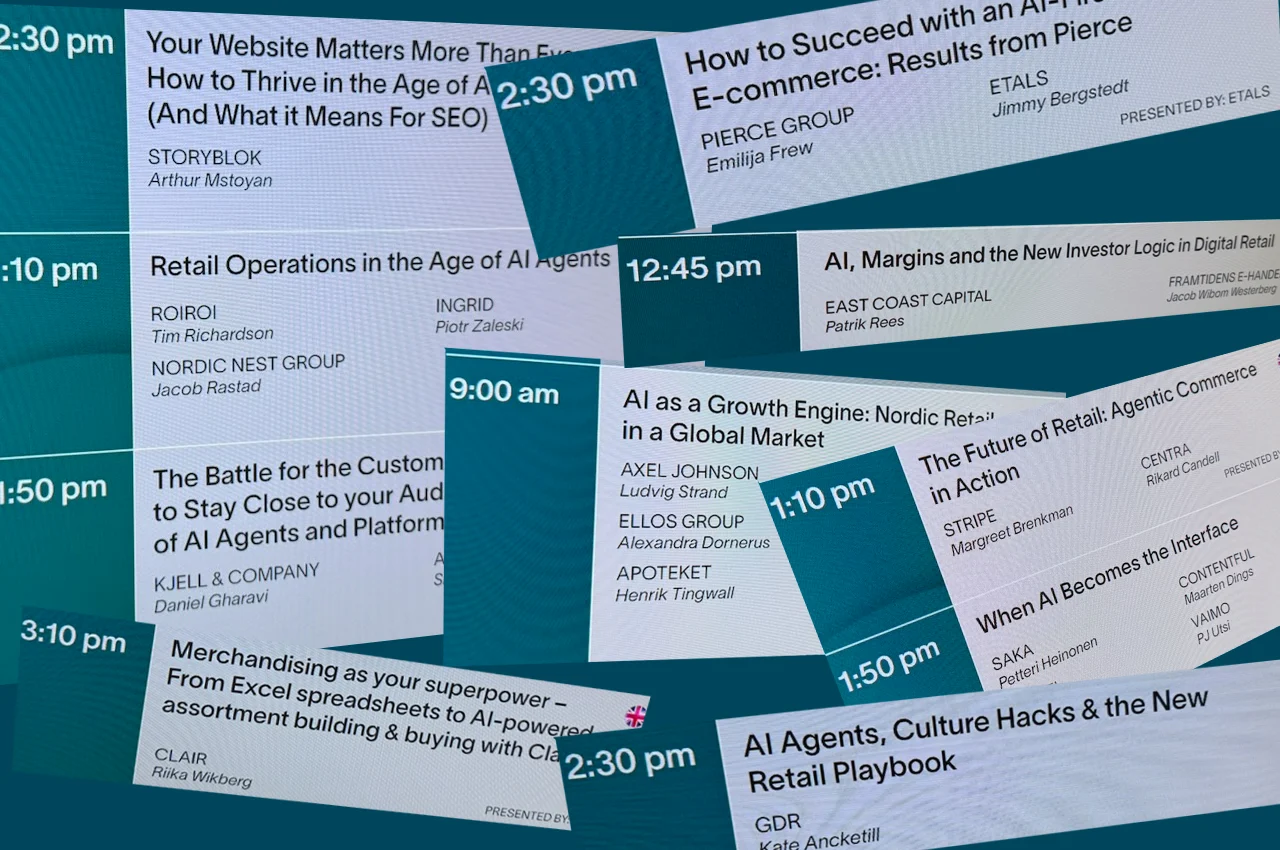
Across both days, more than 25 % of all sessions explicitly focused on AI, generative AI, AI agents or agentic commerce. In contrast, less than 1 % of the program was explicitly dedicated to B2B commerce…
That imbalance says something.
AI was everywhere:
- AI as a growth engine for Nordic retail
- Agentic commerce on multiple stages
- AI-driven recommerce
- AI-optimised brands
- AI in payments and fraud defence
- AI-powered growth and experimentation
The narrative was consistent: AI is no longer an innovation layer. It is becoming infrastructure.
On the other hand, B2B appeared almost as a side note, despite one stage being labelled “B2B AND B2C Reinvented.” There was one clearly framed session on what tomorrow’s B2B customers will expect, and strong hallway conversations around AI in B2B commerce. But structurally, B2B remains underrepresented in the main narrative.
This is interesting. Because in my world, B2B transformation is accelerating just as fast as B2C. Complex buying journeys, configuration, account-based pricing, contract logic and ecosystem selling are all being reshaped by AI and automation. Yet the stage time does not reflect that reality.
The conclusion is not that B2B is slow. It is that the spotlight is still disproportionately on D2C and consumer brands.
From AI hype to AI Infrastructure
There is a noticeable shift compared to previous years. AI is no longer discussed as a future capability. It is discussed as a present operating model, and its AI Agentic is the hype.
Several themes kept reappearing:
- Fundamentals first.
AI can accelerate both B2B and B2C sales, but only when the underlying data is structured and reliable. Data quality is still the constraint. Not algorithms.
- Time-to-value beats theoretical ROI.
The most compelling operators are not waiting for a perfect roadmap. They are iterating now, unlocking efficiency and growth in small but concrete steps.
- Ecosystems win.
Agentic commerce is not built in isolation. Partnerships are becoming just as critical as the technology itself. Payment providers, PIM platforms, CMS vendors, commerce engines, AI layers, logistics players. No one owns the full stack anymore.
- Storytelling plus discovery.
Winning brands bridge product data with narrative. Discovery is no longer just search. It is contextual, conversational and increasingly agent-driven. In a discussion around AI in B2B commerce, one insight resonated strongly: AI goes far beyond agentic shopping. Discovery, configuration, quoting and decision support are equally important, especially in complex sales environments. The hype cycle is stabilizing. The leaders are moving from “AI strategy decks” to operational implementation.
Global Power Shifts and Competitive Pressure
Wednesday morning’s discussion on global power shifts was one of the most strategically relevant conversations of the event. Platforms like Amazon, Temu and Shein are not just competitors. They are redefining consumer expectations around pricing, delivery speed and assortment depth.
The Nordic Market Is Not Isolated.
Policy, regulation and competitiveness were discussed openly. Strong businesses require predictable frameworks. Innovation alone is not enough. Retail competitiveness is both a commercial and political issue.
The Underlying Tension Is Clear:
How do Nordic retailers differentiate when global platforms compete on scale and margin compression?
The answers leaned toward:
- Clear positioning
- Operational excellence
- Strong ecosystems
- Cultural authenticity
- Data-driven experimentation
In short: clarity over imitation.
Payments, Infrastructure and the Invisible Layer
Another theme that gained depth was payments.
Payments are no longer the end of the buying journey. They are becoming part of the experience and, increasingly, part of the value proposition.
Subscriptions, platform models, embedded finance and AI-driven fraud prevention were all discussed. The infrastructure layer of commerce is becoming strategic.
This matters especially in B2B, where payment terms, credit models and financing structures are often deeply integrated into commercial relationships.
The invisible layer is becoming visible.
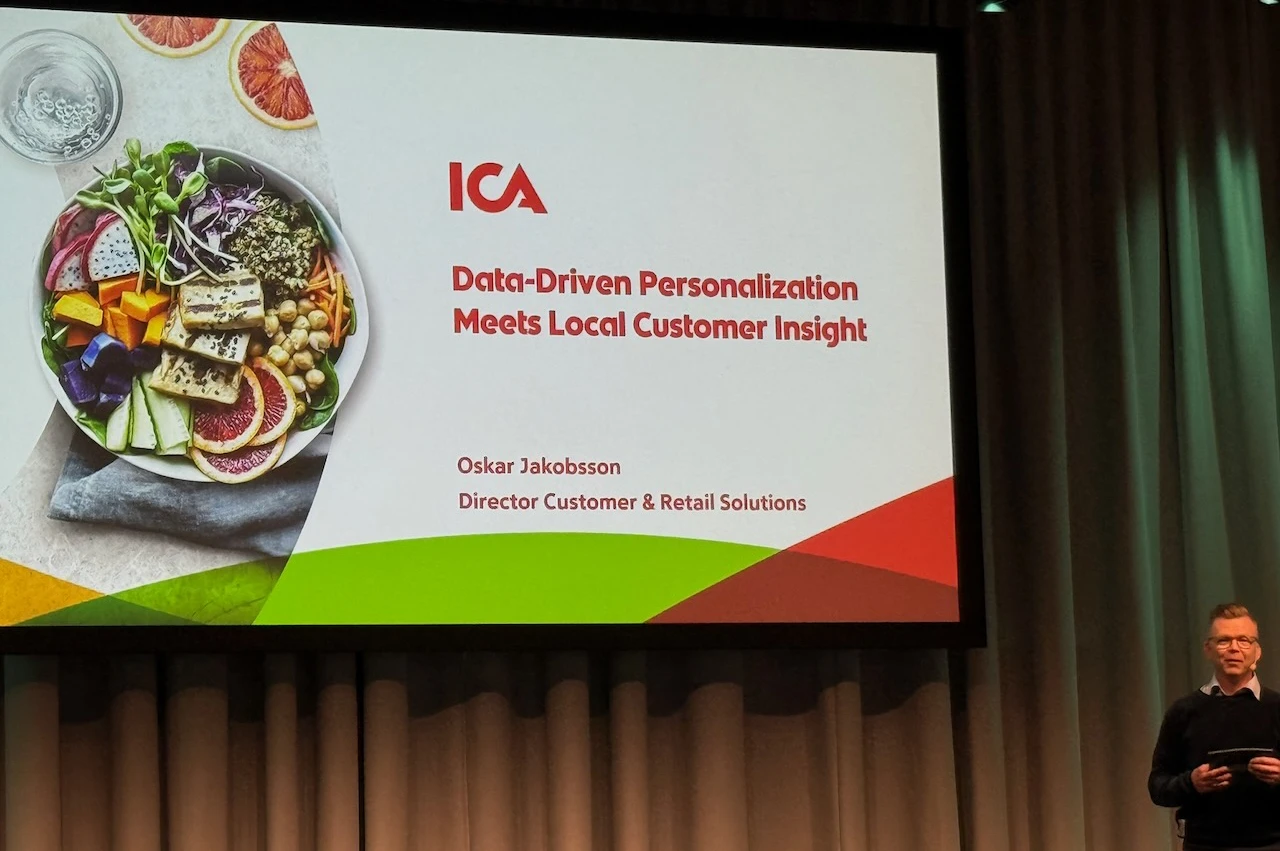
The Expo Floor: Ecosystems in Action
Beyond the stages, the Expo Hall was where theory met practice.
More than 160 exhibitors filled the floor. Meetings were booked. New partnerships formed. Integration discussions happened in real time.
One thing felt clear: commerce is no longer about single-vendor decisions. It is about architecture. Composable thinking is mainstream. Integration is assumed. Automation is expected. AI is being embedded across layers rather than added on top.
For those of us working in enterprise commerce, this is encouraging. The market is maturing. Buyers ask more structured questions. The focus is less on features and more on long-term flexibility.
Culture is Business
If AI were the dominant technology theme, culture was the dominant strategic one. The session with Shazam founder Chris Barton in Congress Hall stood out. He reminded us that disruption is rarely glamorous in real time. Shazam started in a world without smartphones. It barely worked for years. It was slow, clunky and often wrong. And yet, the team persisted.
One message from his session stayed with me:
“- Make it personal. Connect with emotions!”
It sounds simple. It is not.
In commerce, we often optimise for frictionless transactions. But relevance and loyalty are emotional constructs. Cultural capital cannot be manufactured. It must be rooted in something real. Culture is not a backdrop to commerce. It shapes demand, pricing power and brand equity.
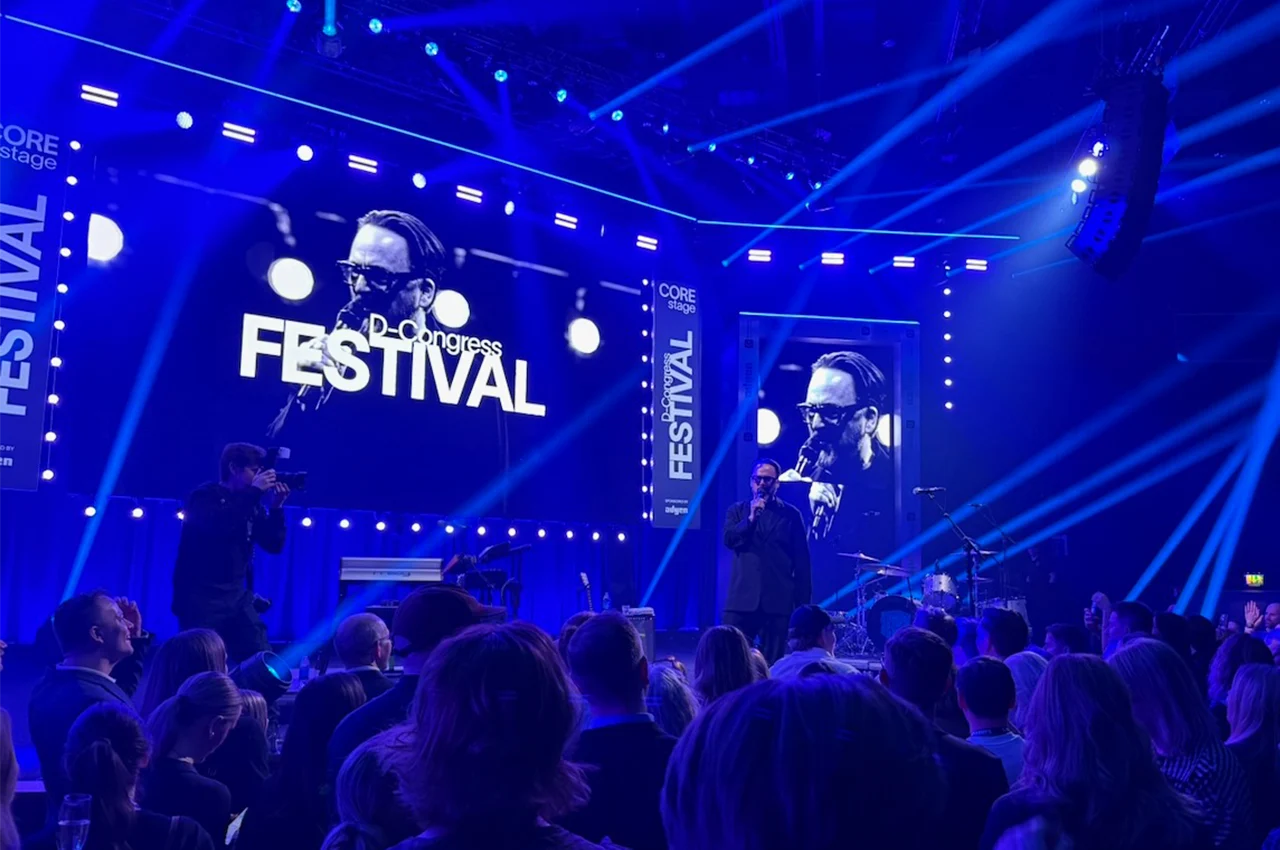
Even the D-Congress Festival reinforced this. Music closed the event, not as entertainment, but as a shared cultural experience. It was a reminder that retail is embedded in society, not separate from it.
A Short HCL Commerce+ Perspective
From an HCL Commerce+ point of view, three things stand out.
First, AI must be embedded into the core commerce engine, not bolted on as an afterthought. Personalization, search, pricing, promotions, contract logic and customer-specific catalogues all benefit from AI. But they only work when the transactional foundation is solid.
Second, B2B deserves more stage time. Complex commerce is often less glamorous than D2C branding, but the economic impact is enormous. AI-driven configuration, guided selling, self-service portals, and contract-based pricing are already transforming B2B at scale.
Third, ecosystems are not optional. Open architectures and strong integration capabilities are critical. Commerce platforms must orchestrate, not dominate.
D-Congress confirmed that AI belongs in the now, not on the roadmap. But it also confirmed that fundamentals still win.
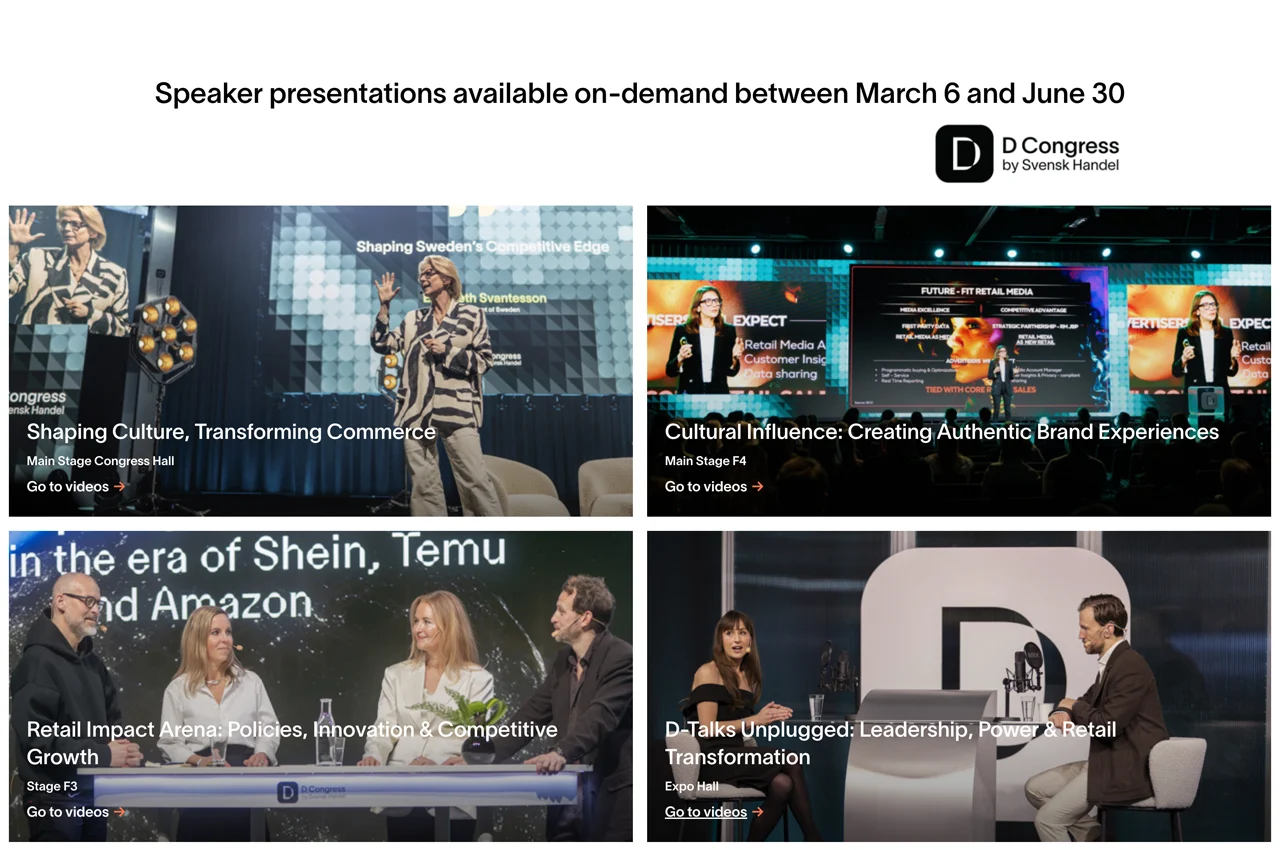
The question is whether we are building the right foundations to make that transformation sustainable. I urge you to have a look at all the material (Almost all sessions are here as videos).

Start a Conversation with Us
We’re here to help you find the right solutions and support you in achieving your business goals.