Fable 5 vs Mythos 5 Enterprise Security: What Changed, What It Means for Defenders
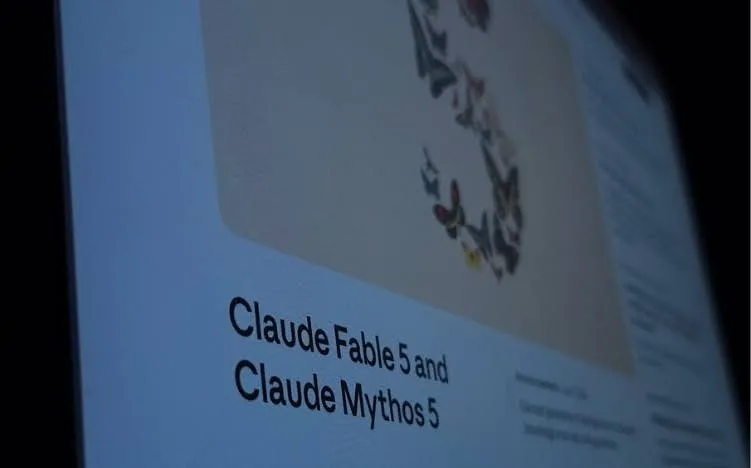
Anthropic launched Claude Fable 5 and Claude Mythos 5 on June 9, 2026. Three days later, following a U.S. government export control directive citing national security authorities, Anthropic disabled both models for all customers worldwide.
The enterprise security lesson does not hinge on whether the models are currently accessible. The underlying shift they represent, Mythos-class AI capability applied to vulnerability discovery and exploitation, is already shaping the threat environment.
The Fable 5 vs Mythos 5 enterprise security story is about one gap: the time between vulnerability discovery and defender action. Mythos Preview, which preceded both models, demonstrated that a working exploit can be built from a disclosed CVE in under a day. The 2026 Verizon Data Breach Investigations Report found organizations take an average of 43 days to fully remediate a known exploited vulnerability. (Source: Verizon DBIR 2026.) That window is where breaches happen.
The question that matters for enterprise security programs: can you prove, with auditable evidence, how quickly exploitable vulnerabilities are closed across your critical assets, and whether that pace is adequate for the threat environment?
Learn how BigFix is built for the Mythos-era threat model
What Changed with Fable 5 and Mythos 5
Both models share the same underlying weights. What separates them is access control and safeguard configuration. Fable 5 was designed for broad availability, with AI classifiers rerouting cybersecurity queries to Opus 4.8 in under 5% of sessions.
Mythos 5 was the restricted variant, deployed through Project Glasswing with those cyber safeguards lifted for vetted partners.
On June 12, the U.S. government issued an export control directive suspending all access to both models by foreign nationals. Because Anthropic cannot segment users by nationality in real time, it disabled both models for all customers.
The stated government concern was a potential jailbreak of Fable 5's cyber safeguards. Anthropic disputed the severity of the finding but complied. Other Anthropic models, including Opus 4.8, remain available.
The suspension itself is instructive for enterprise security leaders. A commercially deployed frontier model with broad cybersecurity relevance was pulled from the market in hours. That speed of regulatory action reflects the level of concern governments attach to AI-enabled vulnerability exploitation. The enterprise security response should match the same sense of urgency, applied to remediation velocity rather than model access.
Why Enterprise Defenders Should Care
Project Glasswing, Anthropic's controlled rollout of Mythos-class AI to defensive organizations, surfaced more than 10,000 high- or critical-severity vulnerabilities across critical software systems in its first weeks of operation. That volume, at that speed, exceeds what traditional vulnerability management programs were designed to absorb.
Frontier AI models accelerate the time between disclosure and weaponization. Mythos Preview built a working exploit from a disclosed CVE in under one day. Compare that to the 43-day remediation average from the Verizon DBIR 2026. That asymmetry creates three concrete pressure points for enterprise security teams:
- Vulnerability volume is rising. National Vulnerability Database data shows CVE disclosures accelerating sharply from 2023 onward. More CVEs means more triage, more patch content, and more endpoints to manage simultaneously.
- Exploitation timelines are compressing. CVSS scores alone are no longer an adequate prioritization framework when AI lowers the cost of building working exploits for previously low-threat bugs.
- The defender's patch cadence has not moved proportionally. That gap is where risk accumulates.
Understanding how AI is compressing exploitation timelines is the starting point for calibrating a response.
FEATURED SNIPPET: Why do Fable 5 and Mythos 5 matter for enterprise security?
Fable 5 and Mythos 5 signal the pace at which AI-enabled exploitation is accelerating. Mythos Preview built working exploits from disclosed CVEs in under one day; organizations take an average of 43 days to remediate known vulnerabilities. That gap is where breaches happen. Regardless of model access status, enterprise defenders need faster remediation, continuous visibility, and auditable proof of exposure reduction.
Fable 5 vs Mythos 5 Enterprise Security: The Real Comparison
The Fable 5 vs Mythos 5 enterprise security comparison is about access, operational risk, and defender readiness. The table below maps those dimensions, updated to reflect the June 12 suspension.
| Dimension | Claude Fable 5 | Claude Mythos 5 | Enterprise Defender Implication |
|---|---|---|---|
| Access | General availability, API, Pro, Max, Team, Enterprise (launched June 9; suspended June 12 by U.S. government directive) | Restricted, Project Glasswing partners, critical infrastructure, U.S. government (suspended alongside Fable 5) | Access suspension itself confirms the risk profile. Mythos-class capability is a national security concern; enterprise resilience must be independent of any single vendor's model availability. |
| Cybersecurity capability | Classifiers reroute cyber queries to Opus 4.8 in under 5% of sessions | Full cyber capability enabled, Anthropic describes it as the strongest cybersecurity model in the world | Vetted defenders were getting full capability. The model suspension underscores why organizations need their own endpoint resilience, not model-dependent defenses. |
| Safeguards | AI classifiers intercept cyber, biology, chemistry, and model-distillation requests | Safeguards lifted in specific cyber domains for trusted use | Classifiers reduce misuse risk but do not eliminate broader AI-enabled threat trends, as the jailbreak concern illustrates. |
| Exploit speed (pre-suspension) | N/A for public (cyber queries blocked) | Mythos Preview demonstrated exploit development from a disclosed CVE in under one day | A disclosed but unpatched vulnerability remains an active risk, regardless of which models are currently accessible. |
| Enterprise security question | Is our vendor's guardrail enough? | Who has access, and are defenders patching faster than adversaries can exploit? | The critical metric is how quickly exploitable vulnerabilities are closed across endpoints. Model access status does not change that. |
The suspension adds a dimension the original launch did not include: enterprise exposure to vendor-level regulatory risk. API integrations built on Fable 5 stopped working within hours of the government directive. That is a continuity risk that endpoint remediation programs do not face.
The operational question for security leaders remains the same regardless: how quickly can exploitable vulnerabilities be closed, and can that speed be proved?
Learn how HCL BigFix is built for the Mythos era at hcl-software.com/bigfix/mythos.
From AI Model Risk to Vulnerability Exposure Risk
AI does not need to invent new vulnerability classes to change the risk calculus. It makes known weaknesses easier to find, prioritize, and exploit. Knowing that 40,000 CVEs were published last year is not the same as knowing which of them applies to your internet-facing assets right now, which are actively being exploited, and which patches are operationally safe to deploy at scale.
The endpoint layer is where that question gets answered. Vulnerability scanners surface exposure. Threat intelligence correlates severity. Faster, more automated remediation closes the gap. The BigFix workflow covers the full loop:
- Detect: Real-time endpoint visibility, which software is installed, which endpoints are internet-facing, which vulnerabilities are exploitable in context.
- Prioritize: CISA KEV and MITRE ATT&CK correlation, focus remediation effort on what adversaries are actively using.
- Act: Remediate exposures in real time - patch, disable, reconfigure, or deploy custom Fixlets across 120+ operating systems including air-gapped and OT environments.
- Prove: Protection Level Agreement reporting, auditable evidence of how long exploitable vulnerabilities remained open, whether remediation targets were met, and whether exposure is trending down.
Continuous exposure management, measuring, remediating, and proving risk reduction as a closed loop, is increasingly important as Mythos-class AI accelerates the speed at which vulnerabilities are surfaced and exploited.
Why Safeguards Are Not a Security Strategy
The Fable 5 and Mythos 5 suspension illustrates the point precisely. Anthropic's classifiers were a genuine investment in responsible deployment. But a single vendor's safety layer, however well designed, is not a substitute for independent enterprise resilience. The directive removed access to both models in hours. Organizations that built their security posture around model-specific guardrails had no fallback.
Mythos-class AI capability is spreading across commercial, open-source, and state-backed ecosystems. Even with Fable 5 and Mythos 5 suspended, comparable capabilities exist elsewhere. Enterprise defenders need four properties that vendor guardrails cannot provide:
- Complete endpoint visibility, knowing what is installed, exposed, and reachable across the full asset inventory.
- Faster, more automated remediation, deploying patches or configuration changes across tens of thousands of endpoints without relying on manual cycles.
- Continuous compliance enforcement, detecting drift and restoring policy at the endpoint, between scan cycles, not after.
- Auditable proof of risk reduction, documentation that regulatory bodies, boards, and cyber insurers can evaluate against agreed thresholds.
Always-on compliance enforcement, applied directly at the endpoint the moment drift occurs, is the operational layer that closes the exposure window that any classifier-based safeguard leaves open.
See always-on compliance enforcement and drift remediation for how BigFix enforces controls at the endpoint the moment drift occurs.
What Enterprise Defenders Should Do Now
Four actions deliver the most defensible improvement in the near term:
1. Prioritize against real adversary behavior, not CVSS scores alone.
- Integrate CISA KEV and MITRE ATT&CK into your prioritization workflow. A vulnerability on the KEV list is being actively exploited right now. That takes precedence over theoretical severity.
2. Apply compensating controls for zero-days before a patch exists.
- Disabling a vulnerable service, blocking the relevant port, or restricting outbound connections can reduce exposure or limit exploitability while teams wait for a vendor patch. BigFix can deploy these controls at scale in minutes across 120+ operating systems.
3. Measure exposure time, not just scan coverage.
- The relevant KPI is not what percentage of endpoints were scanned. It is how long exploitable vulnerabilities remain open on business-critical assets. Protection Level Agreements measure this automatically.
4. Maintain auditable remediation evidence.
- Regulators and cyber insurers increasingly ask for documented proof of remediation velocity, not just attestation that a program exists.
Protection Level Agreements prove reduced cyber risk automatically.
HCL BigFix can remediate exposures in near real time at scale across 120+ operating systems.
Board-Ready Proof in the Mythos-Class AI Era
Boards need answers to three questions. Has the threat materially changed the organization's exposure profile? What is the organization doing about it, at what speed? How can leadership verify that exposure is decreasing?
According to the NACD's 2025 Public Company Board Practices and Oversight Survey, 77% of directors now discuss the material and financial implications of cyber incidents, a 25-point increase since 2022. That conversation is intensifying as AI-accelerated threats raise the stakes.
The reporting gap most organizations face is not data. It is translating technical remediation data into business-readable evidence. Protection Level Agreements automatically measure exploitable vulnerability exposure time against agreed organizational thresholds, giving security, IT, auditors, and executives a shared view: what was fixed, how quickly, which assets missed target, and whether the overall trend is improving.
Board-ready cyber risk reporting, delivered through PLA reporting alongside CISA KEV-aligned prioritization and remediation workflows, is the operational proof that a program is functioning at the speed the threat environment requires.
In a Mythos-class AI era, board-ready cyber risk reporting is the operational proof that a program is functioning at the speed the threat environment requires. The question boards will ask is not 'What is Mythos?' It is 'Are we ahead of it?'
BigFix helps organizations discover, prioritize, remediate, and prove endpoint risk reduction across complex enterprise environments. Learn more about the endpoint management platform.
Are You Ahead of It?
See how BigFix helps enterprise defenders measure and reduce endpoint exposure in the Mythos-class AI era.
Frequently Asked Questions
What is the difference between Claude Fable 5 and Claude Mythos 5?
Both share the same underlying model weights. Fable 5 was publicly available with AI classifiers rerouting cybersecurity queries to Opus 4.8. Mythos 5 was restricted to Project Glasswing partners with those safeguards lifted. Following a U.S. government export control directive on June 12, 2026, both models are currently suspended for all users. (Source: Anthropic, anthropic.com/news/fable-mythos-access.)
Why does the Fable 5 vs Mythos 5 distinction matter for enterprise security?
The launch and rapid suspension of both models confirms that Mythos-class AI capability carries genuine national security risk. For enterprise defenders, the implication is that similar capabilities will continue to spread. The security posture question shifts from 'What AI can our team access?' to 'How quickly can we remediate exploitable vulnerabilities before adversaries act on them?'
How can defenders reduce AI-enabled vulnerability exposure?
Prioritize against CISA KEV and MITRE ATT&CK, not CVSS scores alone. Apply compensating controls, disabling vulnerable services, blocking relevant ports, restricting outbound connections, to reduce exposure or limit exploitability while waiting for vendor patches. Measure how long exploitable vulnerabilities remain open on critical assets. Document remediation velocity with Protection Level Agreements.
What should CISOs report to boards about Mythos-class AI risk?
Three questions: Has the threat materially changed the organization's exposure profile? What is being done about it, at what speed? How can leadership verify that exposure is decreasing? Protection Level Agreement reporting, which measures exploitable vulnerability exposure time against agreed thresholds, provides this evidence for boards, auditors, and cyber insurers.
What is the 43-day figure referenced in BigFix materials?
The 2026 Verizon Data Breach Investigations Report found organizations take an average of 43 days to fully remediate a known exploited vulnerability. Mythos Preview demonstrated the ability to build working exploits from disclosed CVEs in under one day. The gap between those numbers is the exposure window that AI-speed adversaries can operate within.
How does BigFix CyberFOCUS help in the Mythos-era threat environment?
HCL BigFix CyberFOCUS maps vulnerabilities against CISA KEV and MITRE ATT&CK, providing prioritization based on active adversary behavior. It includes Protection Level Agreement modeling to measure exploitable vulnerability exposure time against agreed thresholds. Combined with 630,000+ pre-built Fixlets and an autonomous endpoint agent, it enables organizations to detect, prioritize, remediate, and track exposure reduction across 165M+ endpoints.

Start a Conversation with Us
We’re here to help you find the right solutions and support you in achieving your business goals.